
With energy bills going up and cold winter days sticking around, keeping your Melbourne home warm and comfortable without spending too much money is super important. Did you know that heating hot water uses up to 25% to 30% of all the energy in an average Australian home?
If you are still using an old gas system or a power-hungry electric hot water tank, switching to a heat pump water heater in Melbourne is a smart move. But how do these systems actually work in Victoria’s weather, and are they really worth the money?
Here is an easy guide to how hot water heat pumps work, why they are great for Melbourne homes, and how much money you can save.
What Is an Electric Hot Water Heat Pump?
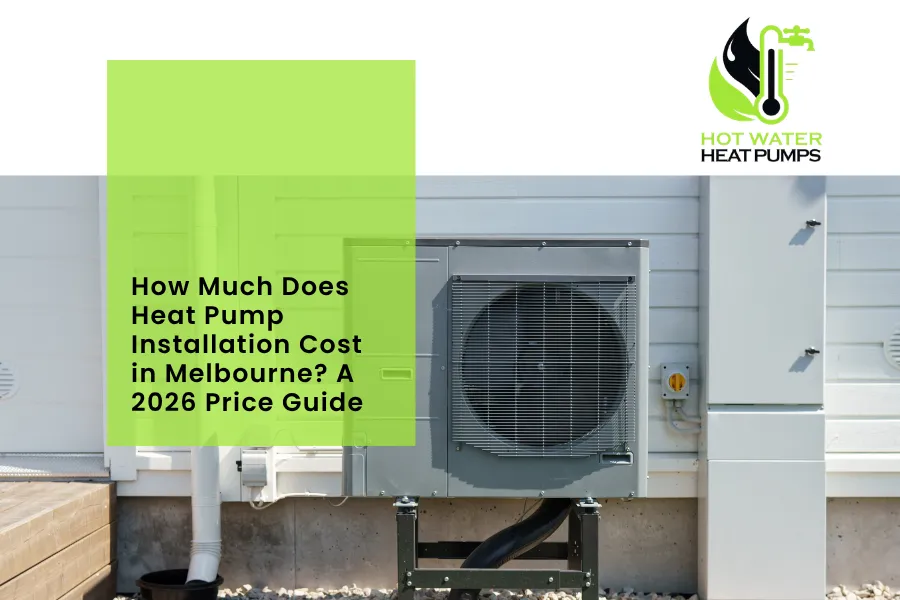
An electric hot water heat pump is a modern hot water system that takes heat from the air outside and uses it to warm up the water in your tank.
Normal electric water heaters use a lot of power to heat water directly, just like a massive kitchen kettle. A heat pump does not make heat directly. Instead, it moves existing heat from the outside air into your water.
Because moving heat uses way less power than making heat, a hot water heat pump in Melbourne can give you the exact same amount of hot water while using up to 70% to 75% less electricity than a standard electric unit.
Simple Tip: Think of a heat pump like a fridge working in reverse. A fridge takes heat out from inside its box and pushes it into your room. A heat pump takes heat from the outdoor air and pushes it into your hot water tank!
How Heat Pump Hot Water Works (Step-by-Step)
Learning how heat pump hot water works is easy when you see the main steps. The system uses a safe liquid (refrigerant gas) that moves around in a loop to trap heat and move it into your water.
Here is how it happens step-by-step:
Step 1: Taking in Air and Heat
A quiet fan pulls outside air into the system. Inside, a special liquid absorbs heat energy from the air, even on cold days in Melbourne.
Step 2: Squeezing the Gas
Once the liquid traps the heat, it turns into a gas. A small electric pump called a compressor squeezes this gas tightly. Squeezing the gas makes it extremely hot.
Step 3: Heating the Water
This hot gas travels through pipes wrapped around your water tank. The heat passes straight into the cold water, making it nice and hot for your showers and taps.
Step 4: Cooling Down to Repeat
After giving its heat to the water, the gas cools back down into a liquid. It passes through a small valve to get cold again, ready to repeat the process.
Do Heat Pumps Work Well in Cold Melbourne Winters?
A lot of Victorian homeowners worry that heat pumps will not work when winter mornings get very cold. Luckily, modern systems are built specifically for cold weather!
Good energy efficient hot water systems in Melbourne are built to handle cold days easily:
- Works in Freezing Weather: Good quality heat pumps keep working well even when it drops to -7°C, so cold Melbourne mornings are no problem.
- Auto Defrost Feature: On icy mornings, thin frost can build up on the outside unit. The system turns on a quick automatic defrost setting to melt the ice in minutes.
- Backup Heating: Most systems have a small backup heater built inside just in case there is a super cold spell, or your family uses heaps of hot water all at once.
Whether you live near the beach or up in the Yarra Ranges, a good heat pump gives you hot water all year round.
Why Get a Heat Pump Hot Water System in Victoria?
Changing your old hot water system to a heat pump brings huge perks for your wallet and your home:
- Up to 75% Lower Power Bills: Uses way less electricity, which saves you hundreds of dollars every single year.
- Great with Solar Panels: If you have solar panels on your roof, you can set your heat pump to run in the middle of the day. That means heating your water for free using the sun!
- Government Rebates: Thanks to the Solar Homes Program and Victorian Energy Upgrades (VEU), eligible homeowners can get government rebates to make buying a system much cheaper.
- Get Off Household Gas: Moving away from gas lowers your carbon emissions and stops you from paying costly annual gas connection fees.
- Better for the Environment: Heat pumps use less power, which means far fewer greenhouse gas emissions compared to old gas or electric units.
Comparing Hot Water Systems for Melbourne Homes
Here is a quick look at how heat pumps compare to other popular systems in Victoria:
|
System Type |
Cost to Buy & Install |
Annual Power Bills |
How Long It Lasts |
Government Rebates? |
|
Heat Pump Water Heater |
Medium (much cheaper with rebates) |
Lowest ($150 – $350/yr) |
10 – 15+ years |
Yes (Solar Victoria & VEU) |
|
Standard Electric Tank |
Low |
Highest ($800 – $1,200+/yr) |
8 – 12 years |
No |
|
Instant Gas Heater |
Medium |
Medium ($400 – $700/yr) |
10 – 12 years |
Phasing out in Victoria |
|
Solar Hot Water (Roof Panels) |
High |
Low ($200 – $400/yr) |
12 – 15 years |
Some rebates available |
Things to Check Before Installing Your Heat Pump
To get the best performance out of your new system, keep these simple steps in mind:
1. Fresh Outdoor Air
Heat pumps need good airflow to pull heat out of the air. Make sure your outside unit is put in an open spot with plenty of room around it, not tucked away in a tiny, closed box.
2. Getting the Right Tank Size
Pick a tank size that fits how many people live in your house:
- 1 – 2 People: 150L to 200L tank
- 3 – 4 People: 220L to 270L tank
- 5+ People: 300L+ tank
A slightly bigger tank lets you heat all your water during the day when it is warmer (or when your solar panels are running), so you never run out.
3. Quiet Running Position
Modern heat pumps are very quiet (about the same noise level as a kitchen dishwasher). Even so, it is best to place the outside tank away from bedroom windows, so everyone sleeps soundly.
Frequently Asked Questions
How long does a heat pump take to heat up the water?
It usually takes about 2 to 4 hours to heat a full 250L tank from the cold. Because the tank has thick insulation, the warm water stays hot for hours without losing much heat at all.
Can I run my heat pump using my solar panels?
Yes! Pairing a heat pump with rooftop solar is the best way to save money. You can set the system timer to run between 10:00 AM and 3:00 PM when your solar panels make peak free power.
How much money can I save with a heat pump in Melbourne?
The average house switching from a standard electric tank to a heat pump saves $400 to $800 every year on electricity bills. If you stop using gas completely, you save even more on connection fees.
Does a heat pump still work when it freezes outside?
Good heat pumps designed for Australian weather keep working easily down to -7°C. If frost forms on the unit, it automatically melts the ice off using its built-in defrost feature.
Are hot water heat pumps noisy to run?
No, modern heat pumps are quiet. They make around 40dB to 50dB of sound, which feels like a gentle rainfall or a fridge running. They are much quieter than old air conditioners.
Can I get Victorian government rebates for a heat pump?
Yes! Eligible homeowners in Victoria can get rebates through the Solar Homes Program and discounts through Victorian Energy Efficiency Certificates (VEECs) to help cover the setup costs.
Upgrade to Energy-Efficient Hot Water Today
Buying a heat pump water heater in Melbourne is one of the easiest ways to protect your household from rising energy costs, cut down on power bills, and enjoy reliable hot water every day.
Want to save money on your energy bills?
Head over to Hot Water Heat Pump today to check out top heat pump models, see if you qualify for Victorian rebates, and get a quick quote for your Melbourne home!