
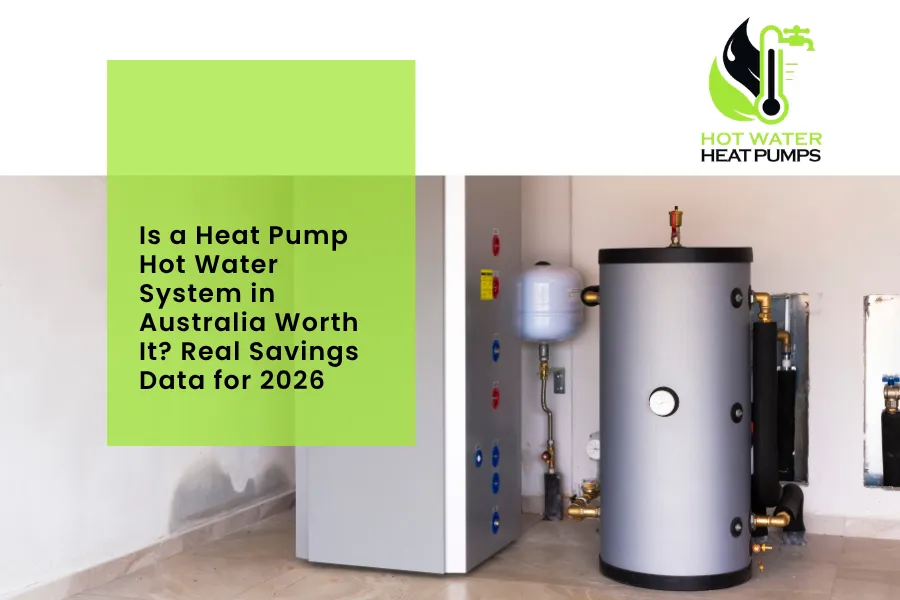
Power bills across Victoria have gone up over recent years, causing many families to look for ways to cut costs. Heating water takes up about a quarter of your home energy use. It is often the single biggest power expense in your home after heating and cooling. Replacing an old electric or gas water heater with a modern system can make a big difference to your quarterly power bills.
Before making a switch, it helps to look closely at upfront equipment costs, government rebates, energy use, and real payback times. This guide explains actual Victorian household savings, rebate options, and system performance to help you decide if a heat pump hot water system in Australia is a smart choice for your home in 2026.
How Heat Pump Hot Water Technology Works in Cold Weather
Understanding how these units work explains why they use much less power than old water heaters. Instead of creating heat directly with an electric coil or burning gas, a heat pump takes heat from the outdoor air and moves it into your water tank.
The unit uses a small compressor and refrigerant cycle, working much like a fridge or air conditioner on the reverse. Outdoor air is pulled through a coil, heating a liquid refrigerant until it turns into a gas. The compressor squeezes this gas, making it much hotter. This heat is then pushed directly into your water tank.
Modern systems built for southern Australian climates work well even when outdoor temperatures drop close to freezing. Quality systems can extract heat from outdoor air down to minus 10 degrees Celsius without relying on heavy backup electric heaters.
Real Savings Data: Heat Pumps vs Old Systems
Comparing energy use across different water heaters shows why energy experts recommend moving away from gas and standard electric tanks.
Comparing Yearly Running Costs in Victoria
An average Victorian family of four uses about 200 litres of hot water every day. A standard 300-litre electric element tank uses around 4,000 kilowatt-hours of power each year. At an average Victorian power price of 32 cents per kilowatt-hour, running an old electric system costs about $1,280 a year.
A high-efficiency heat pump uses about 1,000 kilowatt-hours a year to heat the same amount of water. That drops your yearly running cost to around $320, giving you an immediate saving of about $960 on your power bills.
Running Your Heat Pump with Rooftop Solar
If your home has rooftop solar panels, your running costs drop even lower. Most new heat pumps come with built-in timers that let you run the heating cycle during peak solar hours, usually between 10:00 am and 3:00 pm.
By running your unit on your own solar power, your grid power use for hot water drops close to zero. Homes using solar power to run their heat pump often report yearly running costs under $100, helping you pay off your new system even faster.
Government Rebates and Discounts in Victoria
State and federal rebates help lower initial purchase and installation costs for Victorian homeowners, making system upgrades affordable.
Solar Victoria Hot Water Rebate
The Victorian Government offers direct rebates through Solar Victoria to help eligible families replace old hot water units. Eligible homeowners can get discounts of up to $1,000 off the total purchase and installation cost of an approved heat pump.
Small-scale Technology Certificates (STCs)
Under the Federal Government Renewable Energy Target, heat pumps earn Small-scale Technology Certificates based on their energy savings. These certificates are applied as a point-of-sale discount by your installer, reducing upfront costs by an extra $600 to $1,100 depending on the system size.
Are Heat Pump Hot Water Systems Worth Buying in Outer Suburbs?
Homeowners often ask are heat pump hot water systems worth buying in cooler outer suburbs or regional towns like Melton, Geelong, or Ballarat. These locations experience colder winter weather and higher heating needs, making an efficient hot water system even more beneficial.
A heat pump operates reliably across cold areas when sized correctly by a licensed plumber. Households moving away from bottled LPG gas in regional areas see big cost savings, as LPG remains one of the most expensive ways to heat water in regional Australia.
Homeowners looking for reliable heat pump hot water savings Melbourne Melton wide can reduce their vulnerability to rising electricity and gas supply charges by switching to an all-electric setup.
Important Things to Check Before You Buy
Picking the right unit requires looking at your family size, noise limits, and installation space.
1. Coefficient of Performance (COP)
The COP rating tells you how efficiently the unit turns power into heat. A system with a COP of 4.0 creates four units of heat for every single unit of electricity used. Look for systems that keep a COP of 3.5 or higher during cool winter months.
2. Integrated vs Split Systems
Integrated Systems: The compressor sits directly on top of the water tank as a single unit. These are easy to install and suit narrow side-passages alongside suburban homes.
Split Systems: The compressor sits separately outdoors, like an air conditioner unit, connected by pipes to an indoor or outdoor water tank. Split systems are quiet and flexible for tight spaces.
3. Noise Levels and Unit Placement
Compressor units make a gentle fan humming noise while running, usually between 40 and 50 decibels. Place your unit away from bedroom windows or neighbouring fence lines to ensure quiet nights.
Simple Care Tips for Your Heat Pump
Taking care of your system keeps running efficiently for many years.
Clear Space Around Outdoor Unit: Keep the outdoor compressor free from garden weeds, fallen leaves, or stored boxes to ensure good airflow.
Test the Relief Valve: Gently lift the pressure relief valve lever every six months to clear sediment and check safety operation.
Check Tank Protection: Have a plumber inspect the internal anode rod every four to five years to protect your tank against rust.
Clean Air Intakes: Dust off the air intake grilles once a year to keep the compressor running smoothly.
Frequently Asked Questions
Is a heat pump hot water system Australia wide a smart financial choice?
Yes, a heat pump hot water system in Australia cuts hot water energy use by up to 70 percent compared to old electric tanks, saving typical families $800 to $1,000 every year on power bills.
Is a heat pump hot water system worth it in Victoria during cold winters?
Yes, modern heat pumps work well even in cold winter conditions. Quality units extract heat from chilly outdoor air without needing backup electric heaters, keeping running costs low year-round.
What is the expected heat pump hot water ROI in 2026 for Victorian homes?
With Solar Victoria rebates and STC discounts bringing net installation costs down to around $2,000, most Victorian families recover their initial investment within two to three years.
How much can I save on heat pump hot water in Melbourne and Melton?
Homeowners switching from old electric or LPG systems in Melbourne and outer areas like Melton save between $700 and $1,200 each year, with extra savings achieved when pairing the unit with rooftop solar.
Are heat pump hot water systems worth buying compared to natural gas?
Yes, rising gas connection charges and usage rates make gas water heating expensive. Switching to a heat pump removes gas supply charges and offers much lower daily running costs.
How long does a quality heat pump hot water system last?
A well-maintained heat pump lasts between 10 and 15 years. Regular servicing and replacing the tank anode every five years helps keep the system running for a long time.
What tank size does a typical family need?
A family of three to four people usually needs a 250 to 300-litre tank to ensure a steady supply of hot water during peak morning or evening shower times.
Conclusion
Upgrading to a heat pump hot water system in Australia is one of the best ways to lower your household energy bills. With low running costs, good government rebates, and fast payback times, switching to a heat pump delivers solid savings while protecting your home against rising power prices.
If you are ready to cut your hot water bills and explore energy-efficient options, contact the team at Hot Water Heat Pump. Our Victorian plumbing specialists can help you choose the right system for your home and assist with your rebate application today.