
Power bills are climbing all the time, and many Australians are turning to ways to bring down the amount of money they have to pay out each month for electricity. Heating water makes up for about a quarter of the average Australian’s power bill, making it a prime candidate for reduction. Upgrading your hot water system is one of the easiest ways to bring down your power bill if you’re considering new equipment.
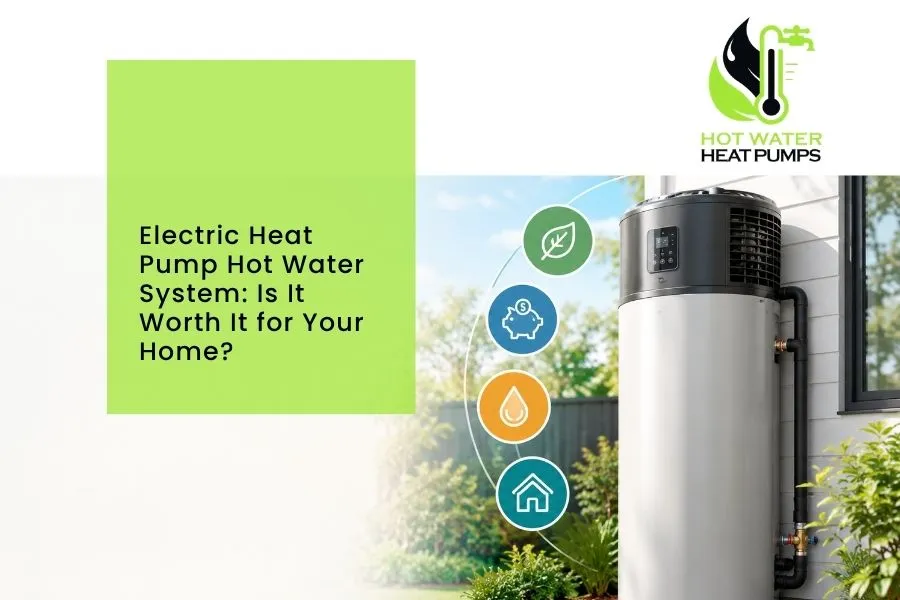
An electric heat pump hot water system is a perfect solution to this problem, as they can use up to 70% less electricity than older standard electric systems by taking advantage of the warmer air surrounding your property.
In this guide you will learn everything you need to know about heat pump hot water systems including how they work and compare to standard hot water heaters, what it costs to have one installed, and whether it’s right for your property and needs.
What is an Electric Heat Pump Hot Water System?
An electric heat pump hot water system is a form of energy saving water heater that takes advantage of the ambient air surrounding your property to provide you with a steady supply of hot water. Essentially removing heat from the air and using it to warm up your household water, these machines operate in a similar manner to a refrigerator operating in reverse.
Below is a quick breakdown of how these systems work:
Pulls Air in: A fan is used to pull in outside air over a cooling coil containing a special fluid.
Soaks up Heat: The warmth of the air causes the fluid in the coil to turn into a warm gas.
Squeezes Gas: The warm gas is then squeezed into a smaller space, causing it to become very hot.
Heats Water: The super heated gas then runs through a coil either inside or on the side of your water tank, using its heat to warm up your water.
Starts Over: The gas is then cooled down until it returns to its liquid state before being pumped back into the coil to start the process over again.
Because these units move heat that already exists in the air rather than making it, they use very little power, even on cool winter days across southern Australia.
Heat Pump vs Electric Hot Water: Key Differences Explained
If you are replacing an old unit, you might be deciding between a standard electric tank and a modern heat pump. Here is why so many Australian homes are making the switch.
1. Power Usage and Savings
Standard electric hot water tanks use heavy heating elements that take a lot of power to run. A good electric heat pump hot water system is 3 to 5 times more efficient. That means for every 1 unit of power it uses, it creates 3 to 5 units of heat for your water.
2. Good for the Environment
Because heat pumps use far less electricity from the main grid, they help lower your home’s total carbon emissions. If you have rooftop solar panels, you can run your heat pump during the day using free power straight from the sun.
3. Noise and Placement
Standard electric tanks sit quietly in a cupboard, but heat pumps have a fan and compressor, so they need to be installed outside. Modern units run quietly at around 40 to 50 decibels, which sounds like a quiet outdoor air conditioner.
| Feature | Standard Electric Tank | Electric Heat Pump System |
|---|---|---|
| How It Heats | Heavy heating element inside tank | Uses outside air and a small compressor |
| Energy Efficiency | Basic (100% efficient) | Super efficient (300% to 500% efficient) |
| Average Yearly Power Cost | $800 – $1,400+ | $200 – $450 |
| Rooftop Solar Friendly | Uses high power for long periods | Uses low power; easy to run on daytime solar |
| Where to Put It | Inside or outside | Outside only (needs fresh air) |
How Much Does a Heat Pump Hot Water System Cost?
When looking at the heat pump hot water cost, it helps to balance the initial buy price against your monthly power bill savings and government discounts.
Upfront Unit and Installation Costs
Basic Units: $1,500 to $2,500 (unit only)
Top-Quality Units: $2,800 to $4,500+ (unit only)
Installation: $800 to $1,800 depending on plumbing work, wiring, and outdoor space access.
Government Rebates and Discounts
Federal and state governments offer great discounts to help Aussies switch to energy-saving appliances:
Small-scale Technology Certificates (STCs): A national scheme that drops the upfront price right at the time of purchase.
State Programs: Schemes like Victoria’s VEU or NSW’s Energy Savings Scheme (ESS) can knock hundreds or even thousands more off the bill.
With rebates applied, many Australian homeowners pay between $1,200 and $2,800 out-of-pocket for a fully installed unit.
Yearly Power Savings
Replacing an old standard electric unit with an efficient heat pump will reduce your quarterly power bills immediately:
Average annual savings: $400 to $900 every year for an average family of 3 or 4.
Payback period: Most households get back the amount paid for the heat pump through reduced power bills within 2 to 4 years.
Finding the Best Electric Hot Water System in Australia
Finding the best electric hot water system in Australia depends on the family size, place of residence, and the location of the unit outside the home.
Key Things to Check Before Buying
Tank size: Go with 150L–200L, 250L–300L, and 315L for 1-2 people, 3-4 people, and large families respectively.
Use in cold climates: If you have a family that lives in the mountainous or cold areas with temperatures below freezing at night and during the day, opt for a cold climate model that operates effectively under -7C.
Built-in Timers: Pick a model with a simple built-in timer so you can set it to heat water between 10:00 AM and 3:00 PM when solar power is highest.
Noise Rating: Look for quiet models rated under 48 dB if the system sits near a bedroom window or fence line.
All-in-One vs Split Systems
All-in-One (Monobloc): The fan unit sits right on top of the water tank in one tall piece. These are simple to install if you have open wall space outside.
Split System: The fan unit sits on the ground or wall separately and connects to the water tank through small pipes. These are great if you have low roof overhangs.
How Long Do Heat Pump Hot Water Systems Last?
A good electric heat pump hot water system usually lasts between 10 to 15 years with basic care. High-end models with strong stainless steel tanks can last 15 years or longer.
Simple Care Tips for a Longer Life
Check the Relief Valve: Lift the small lever on the safety valve every six months to make sure water flows easily and extra pressure can escape.
Keep Vents Clean: Gently wipe away dust, leaves, or garden debris blocking the fan vents so air can flow freely.
Change the Anode Rod: If your unit has an enamel tank, ask a plumber to check and replace the internal protective rod every 4 to 5 years.
Get a Routine Service: Book a simple check-up with a qualified plumber every 3 to 5 years to test the settings, pipes, and electrical parts.
Frequently Asked Questions
What is a heat pump hot water system?
A heat pump hot water system is an energy-efficient water heater that uses a heat pump to extract free energy from the environment and transfer it to the water tank by utilizing a small amount of electricity.
How much is a heat pump hot water system?
A heat pump hot water system costs between $1,500 and $4,500 (equipment) and the installation fee. However, the Australian government offers rebates that reduce the overall cost to between $1,200 and $2,800.
What is the best heat pump hot water system?
The best system depends on your family size and budget. Top models in Australia have high efficiency ratings, run quietly under 48 dB, work well in cold weather, and offer strong 7 to 10 year warranties.
How long do heat pump hot water systems last?
Heat pump hot water systems last between 10 and 15 years on average. Simple care, like keeping air vents clear and testing safety valves regularly, helps keep the unit working well for years.
Do heat pumps work in cold weather?
Yes, modern heat pumps are designed to pull heat from outside air even when temperatures drop down to -7°C or -10°C. Many models also have an automatic defrost setting or back-up heater for icy days.
Can I run a heat pump on my rooftop solar?
Yes, connecting your heat pump to rooftop solar is a great choice. By using a simple built-in timer, you can set the unit to heat water during sunny mid-day hours using free solar power.
Conclusion
Switching to an electric heat pump hot water system is one of the smartest upgrades you can make for your home. By taking warmth straight from the air, a heat pump uses up to 70% less electricity, protects your home from rising power costs, and pairs perfectly with rooftop solar panels.
When you add up government rebates and yearly power bill savings of $400 to $900, most systems pay for themselves in just a few short years. You get steady, reliable hot water while keeping your energy bills low.
Ready to lower your power bills and enjoy reliable hot water at home? Contact the helpful team at Hot Water Heat Pump today for expert advice, friendly service, and fast installation right across Australia.