

Choosing a hot water system can make a real difference to your household energy bills, but finding the right option depends on your home, budget and hot water needs. Heat pump and solar hot water systems offer different advantages, so understanding their costs, efficiency and installation requirements can help you make an informed decision.
Keep reading to learn more about heat pump vs solar hot water systems in Victoria, their potential savings, key benefits and how to choose the right option for your home in 2026.
How Heat Pump and Solar hot water systems work
Before comparing costs and savings, it helps to understand how each system heats water.
Heat pump hot water systems
A heat pump hot water system extracts heat from the surrounding air and transfers it to water stored in a tank. It uses electricity to operate the compressor and other components, but it can deliver several units of heat for each unit of electricity consumed.
Modern heat pumps are designed to operate across a range of outdoor temperatures, making them a practical option for many Victorian homes. Their performance still depends on the model, weather conditions, installation and household hot water demand.
Solar hot water systems
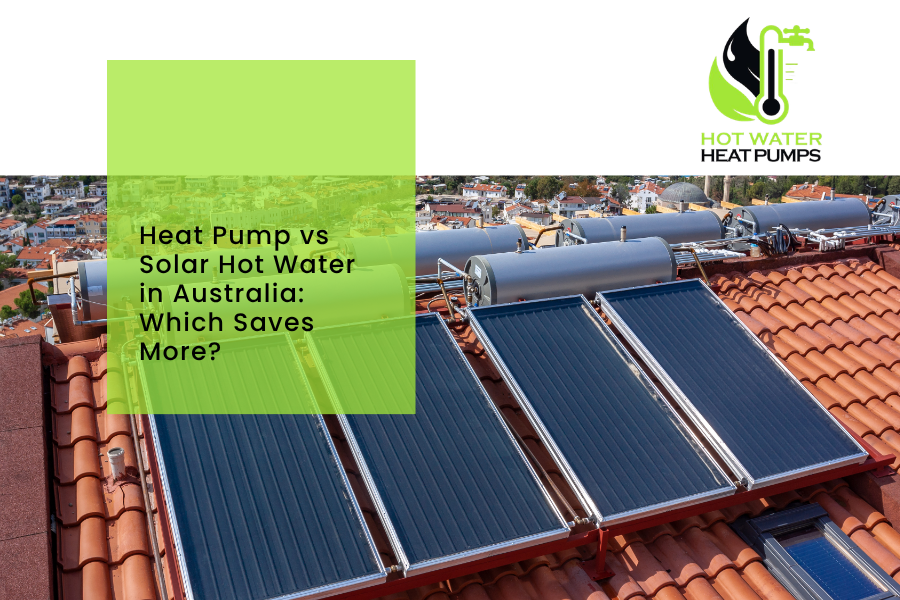
A solar hot water system uses roof-mounted solar collectors to absorb energy from sunlight and heat water. The heated water is stored in an insulated tank for household use.
These systems can significantly reduce the energy needed for water heating when sunlight is available. However, performance may decrease during cloudy weather and winter, so a gas or electric booster is generally needed to maintain a reliable hot water supply.
Heat Pump vs Solar Hot Water: Key Differences
Both options can improve energy efficiency, but the right choice depends on how you use hot water and the conditions around your property.
| Feature | Heat pump Hot Water | Solar Hot Water |
|---|---|---|
| Energy source | Heat from the air and electricity | Sunlight, with a booster when needed |
| Weather dependence | Affected by air temperature and operating conditions | Strongly affected by sunlight |
| Roof space | Generally not required for collectors | Usually requires suitable roof space |
| Installation | Outdoor unit and storage tank, or a split system | Roof collectors, storage tank and plumbing |
| Running costs | Usually low compared with conventional electric systems | Can be low when sunlight provides most of the heat |
| Maintenance | Periodic checks of the unit and tank | Checks of collectors, plumbing, pumps and booster components, where fitted |
| Best suited to | Homes seeking efficient electric water heating | Homes with suitable roof exposure and space for collectors |
Actual costs and performance vary by system design, household usage, local weather and electricity tariffs.
Solar Hot Water vs Heat Pump, Which System Offers Greater Savings in Victoria?
When comparing solar hot water vs heat pump hot water savings, look beyond the purchase price. Your ongoing energy consumption, available rebates and installation requirements all affect the total cost of ownership.
Heat Pump Running Costs
Heat pumps use electricity to move heat from the air into the water rather than generating all the heat directly. This can make them considerably more efficient than conventional electric-resistance water heaters.
Homeowners may reduce costs further by operating a compatible system during periods of cheaper electricity or when rooftop solar panels are generating power. Correct system sizing and suitable installation are also important for achieving expected savings.
Solar Hot Water Running Costs
Solar hot water systems can use free energy from sunlight to heat water, reducing the amount of purchased electricity or gas needed for boosting. Homes with good solar exposure and regular daytime hot water demand may benefit significantly.
However, cloudy conditions and shorter winter days can increase reliance on the booster. The system’s overall savings depend on how much hot water the collectors can heat throughout the year and the energy source used for backup heating.
Comparing Long-Term Value
There is no single winner for every household. A solar hot water system may deliver excellent savings where roof conditions are favourable and sunlight meets much of the household’s demand. A heat pump can offer more consistent, practical performance without relying on roof-mounted collectors.
For a fair comparison, request quotes that include equipment, installation, any required electrical or plumbing upgrades, expected energy use, servicing and applicable rebates.
Benefits of a Heat Pump Over Solar Hot Water
For many Victorian households, heat pumps offer several practical advantages.
1. No roof-mounted solar collectors
A heat pump generally does not require roof collectors, making it useful for homes with limited suitable roof space or difficult roof access.
2. Efficient electric water heating
Heat pumps can use substantially less electricity than conventional electric-resistance systems, helping reduce energy consumption when correctly installed and operated.
3. Suitable for all-electric homes
A heat pump can support a household moving away from gas appliances, particularly when paired with rooftop solar panels or an appropriate electricity plan.
4. Flexible installation options
Integrated and split-system models provide different installation possibilities. The most suitable design depends on available outdoor space, household size and the property’s layout.
5. Potential access to incentives
Eligible Victorian homeowners may qualify for government rebates or other discounts, reducing the upfront cost of an approved heat pump installation.
Benefits of Solar Hot Water Over Heat Pumps
Solar hot water systems offer several advantages for Victorian homeowners, particularly properties with good sunlight exposure and suitable roof space.
Uses free solar energy
Solar hot water systems use sunlight to heat water, reducing the need to purchase electricity or gas for water heating when sufficient solar energy is available.
Potential for lower running costs
With good sunlight exposure, solar hot water can reduce reliance on backup heating, helping households lower their ongoing energy bills.
Less reliance on electricity
Solar collectors use sunlight as their primary energy source, which can reduce electricity consumption for water heating compared with an electrically powered heat pump.
Suitable for sunny locations
Homes with suitable roof orientation and minimal shading can benefit from effective solar collection, particularly during warmer months when sunlight is more readily available.
Reduced household energy consumption
By using renewable solar energy, these systems can reduce the amount of purchased energy needed for hot water, depending on seasonal conditions and backup heating requirements.
How to Choose the Right Hot Water System for Your Home
To compare hot water systems in Victoria in 2026, consider the following factors before making a decision.
Household size and hot water demand
A larger household generally requires more hot water and suitable storage capacity. Choose a system that can meet peak demand without unnecessary energy consumption.
Available space and installation conditions
Check the space available for an outdoor heat pump unit, storage tank or solar collectors. Noise, airflow, roof orientation and access for future maintenance can also affect suitability.
Electricity tariffs and existing solar panels
Your energy plan can influence running costs. If you already have rooftop solar panels, a compatible heat pump may be scheduled to operate when solar electricity is available.
Total cost over time
Compare the upfront price, expected energy bills, servicing, equipment lifespan and available incentives. A slightly higher initial investment may provide better value if it reduces ongoing expenses.
Professional installation and support
Choose a qualified installer who can assess your property, explain the available options and provide a clear quote. Correct installation helps support safe operation, efficiency and warranty requirements.
Why choose Specialized Hot Water Heat Pumps?
Hot Water Spec Air specialises in heat pump hot water solutions for homes and businesses across Melbourne and selected regional areas. The team can help homeowners assess their hot water requirements, choose a suitable system and understand the installation process.
- Heat pump supply and installation.
- Options from established hot water brands.
- System recommendations based on household size and requirements.
- Assistance with eligible rebate processes.
- Hot water replacement, repairs and maintenance.
Final thoughts
When comparing heat pump vs solar hot water systems, the biggest savings depend on your property, energy prices, household usage and installation costs. Solar hot water can perform well in homes with good sunlight exposure, while heat pumps offer efficient electric water heating without requiring roof-mounted collectors.
Before choosing a system, compare the full heat pump installation cost, expected running costs and available Victorian rebates. A professional assessment can help you identify an option that suits your home and delivers reliable hot water with better long-term value.
FAQs About Heat Pump vs Solar Hot Water
1. Is a heat pump better than solar hot water in Victoria?
A heat pump may suit homeowners who want efficient electric water heating without roof collectors. Solar hot water can be a good choice for properties with strong sunlight exposure. The better option depends on installation costs, household usage and site conditions.
2. Which hot water system has lower running costs?
Both systems can have low running costs. Solar hot water uses sunlight to heat water, while a heat pump transfers heat from the air using electricity. Actual costs depend on weather, booster use, electricity prices and household demand.
3. Can I get a rebate for a heat pump hot water system in Victoria?
Eligible homeowners may qualify for Victorian hot water rebates and other applicable discounts. Eligibility depends on factors such as the property, existing system and approved product. Check the current requirements before arranging installation.
4. Can a heat pump work during a Victorian winter?
Yes. Many modern heat pumps are designed to operate in cooler weather, although their efficiency and heating time can change with outdoor temperatures. Choose a model suited to local conditions and your household’s hot water needs.
5. Is solar hot water worth installing in 2026?
Solar hot water can be worthwhile when a property has suitable roof space and good sunlight exposure. Consider the installation price, backup heating requirements, maintenance and available incentives before deciding if it offers better value than a heat pump.